Insights
Design Considerations for Indoor Practice Facilities
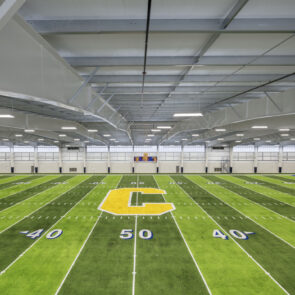
School districts across the country are facing a variety of external pressures—from expanding extracurricular participation to increased expectations for collegiate-level amenities—that are calling for a new type of space.
Once reserved primarily for collegiate and professional athletics, indoor practice and training facilities are quickly becoming an essential part of how K–12 schools serve students, student-athletes and the broader community. By providing flexible, weather-independent space, districts can help students balance school life with family life and achieve better academic and athletic outcomes.
Improving Academic Performance
Academic research continues to highlight the connection between proper sleep and student performance in the classroom. As participation in extracurricular activities continues to rise, many student-athletes find themselves practicing before school or until 9 or 10 p.m., particularly during inclement weather seasons when outdoor fields are unavailable. An indoor practice facility can be a cost-effective way to maximize utilization by extending practice capacity without extending practice hours.
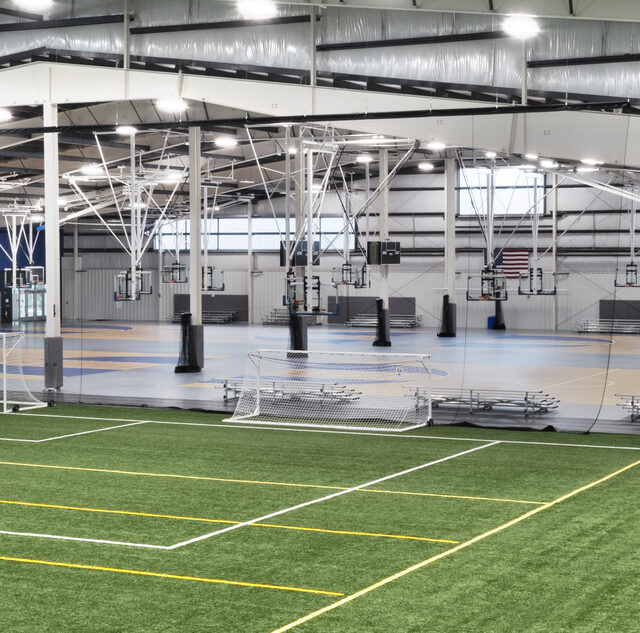
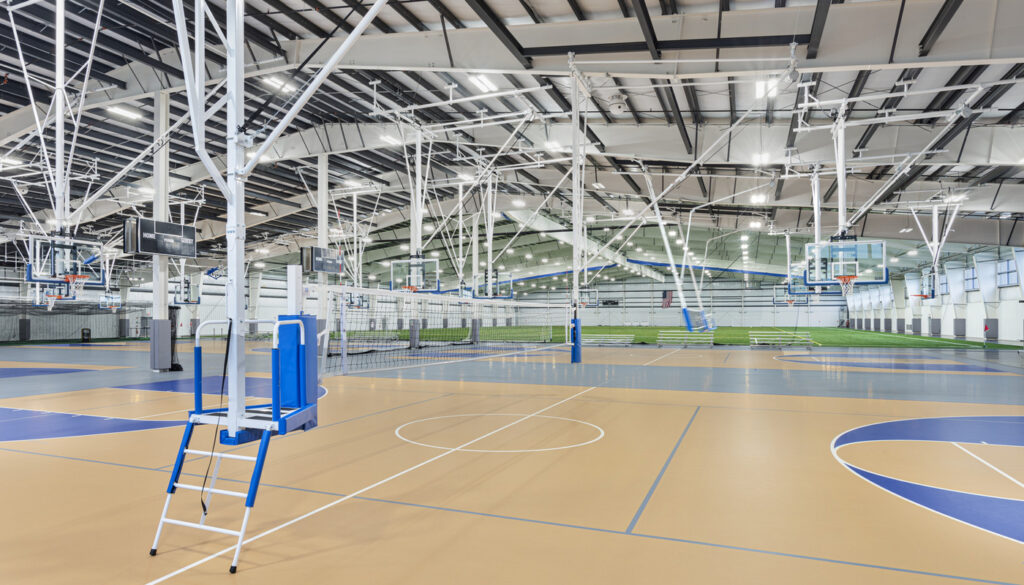
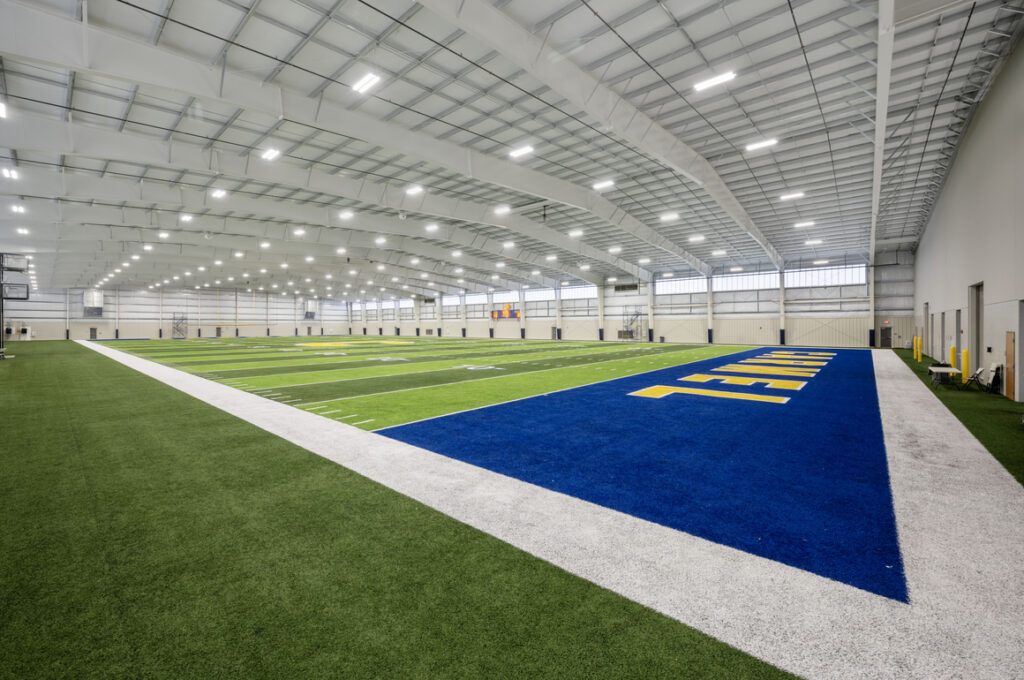
Space types, quantities and definitions for these types of facilities can vary widely. Most facility conversations initially default to a full-sized, turfed football field or soccer field. In either case, the field can be segmented with strategically-placed dividers and hanging amenities to easily transform to accommodate day-to-day and hour-by-hour needs.
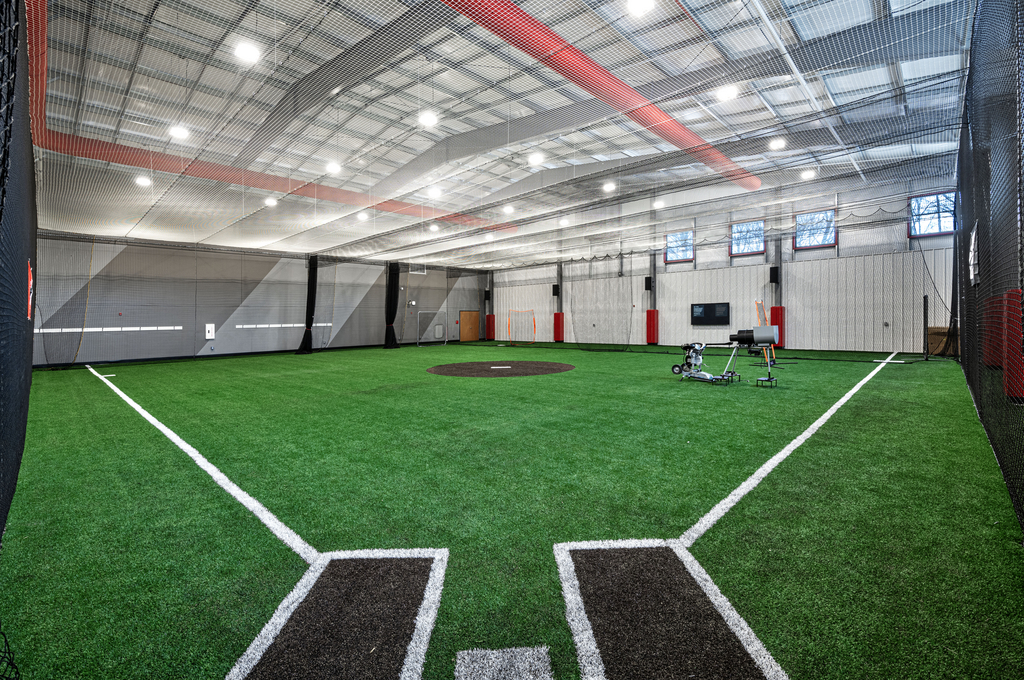
With thoughtful design interventions, these large-span spaces can also support:
- Baseball and softball practice (with retractable netting systems)
- Marching band rehearsals
- Lacrosse and rugby
- Golf simulators and skill development areas
- Dance and cheerleading
- Standardized testing or large school events
However, modern indoor facilities are evolving beyond simple open turf fields. This requires an extended conversation to maximize their impact. School districts and their architects must answer two questions:
1. WHY is this facility needed? What is the real purpose of the facility and whom it will serve?
2. WHAT are the desired outcomes? What added value is an indoor practice and training facility going to add to our students, parents, teachers, athletes and community members?
When the Why and What is clear, the design decisions that follow become far more strategic, impactful and fiscally-responsible.
Elevating Sports Performance
Trends at the higher education level often influence expectations at the K–12 level. Student-athletes, coaches and communities increasingly look for training environments that mirror collegiate standards.
Examples include the ability to incorporate:
- Rehabilitation and sports medicine areas
- Plyometric and speed training zones
- Strength and conditioning spaces
- Sports performance technology integration
- Recovery lounges and wellness-focused rooms
- Nutritional science and commodities
- Tutoring and other academic support services
- Downtime destinations
- Sports business and management support and resources
These enhancements support injury prevention, year-round conditioning, safe environments, academic support and basic life skills specific to a student-athlete. Having conversations early in the planning and design process creates operational efficiency while elevating the overall performance ecosystem necessary for development of a successful, well-rounded student-athlete.
Enhancing the Spectator Experience
When indoor practice facilities are intended to host competitions or community events, the design approach expands. Fixed or retractable seating, enhanced acoustics, upgraded sound systems, and digital scoreboards may all become necessary components.
Incorporating concessions, upgraded restroom amenities, viewing mezzanines, and gathering areas allows the facility to support tailgating, tournaments, and special events—transforming it from a practice venue into a community destination.
Key design strategies include:
- Integrated branding and school identity
- Feature walls, graphics and broadcasting to create social media moments
- Sponsorship and donor recognition areas
Maximizing Community Use
Community access can significantly increase public support for funding capital projects while providing long-term return on investment. Designing for shared use ensures the building serves more than just after-school athletics.
Potential additions may include:
- An elevated indoor walking track
- Multi-purpose community rooms
- Convertible ball courts
- Meeting or event rental spaces
- Café or small restaurant areas
- Integrated exterior gathering spaces, plazas and gateways
These amenities build equitable access to training, amenities and programs within the community and can also generate revenue beyond the school day and throughout the year.
Designing with Purpose
Indoor practice facilities represent a highly flexible opportunity to elevate student experience, athletic performance, and community engagement. But the most successful projects don’t begin with square footage—they begin with clarity.
By defining the why—academic support, athletic development, spectator engagement, or community activation—districts can align design decisions with long-term goals.